
Microsoft announced ‘The Future Of SharePoint’ which detailed their vision, roadmap and significant investments across user experience in SharePoint Online.
The company states,
“We’re excited by the potential and ability for our customers and professional developers to innovate on these scenarios and drive them to the next level.”
Introducing the SharePoint Framework
SharePoint Framework is a Page and Part model which enables complete support of the client side development, easy integration with Microsoft Graph and support for open source tooling.
In fact, the company has built the new experience for the mobile app, SharePoint Online and OneDrive for Business which includes document library and list experiences using SharePoint Framework.
Microsoft states,
“We designed the SharePoint Framework to empower SharePoint developers both inside and outside Microsoft. Our engineers are building our modern experiences using the SharePoint Framework. You can use the same technology, tools and techniques we use to build more productive experiences and apps that are responsive and mobile-ready from day one.”
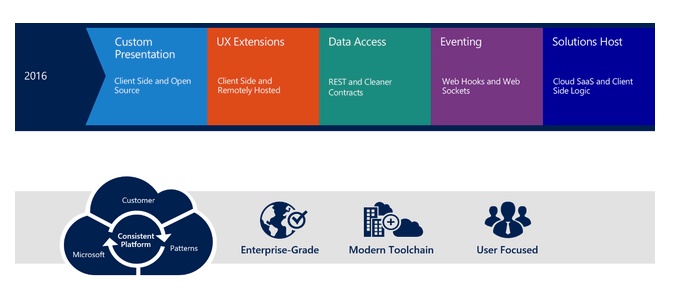 Image Source: blogs.office.com
Microsoft will now allow their partners, customers, and independent developers to leverage the latest JavaScript framework such as React and Angular. This model provides better experiences, performance, mobile support and much more while broadening their developer ecosystem from .NET and beyond.
The SharePoint Framework and its related toolchain helps developers to solve the challenges which have been recently faced by the company. Now, with the SharePoint Framework, the company has a structured approach to modern app development, end to end, which is not dependent on .NET.
The company states,
“We’re enabling you to choose the framework that you want. We’re evolving SharePoint extensibility to meet the needs of our developer community today and opening up opportunities in the cloud that align more closely to what our customers have on-premises.”
The SharePoint Framework will now be available to the existing SharePoint sites, and you will be able to host client-side web parts developed with new SharePoint Framework on existing SharePoint pages.

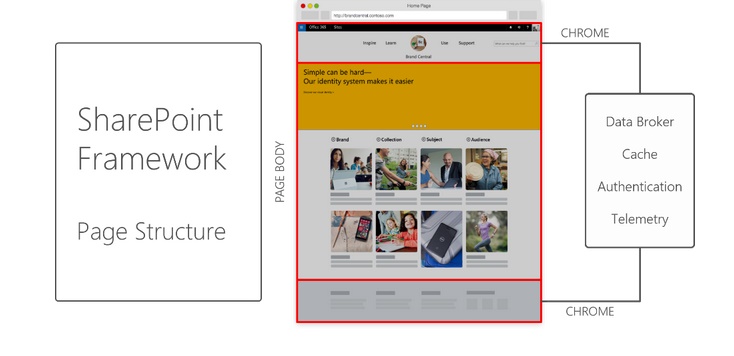 Image Source: blogs.office.com