
An Oracle database is a relational database management system which was developed by the Oracle corporation in 1977 by Lawrence Ellison and other developers. Oracle DB is a widely-used relational database engines. It is a collection of data treated as unit. The main reason of using database is storing and retrieving user related information.
Every Oracle database contains Logical and Physical Structures.
- A Logical Structures consists of tablespaces, schema objects, extents and segments.
- A Physical Structures are data files, redo log files, control file.
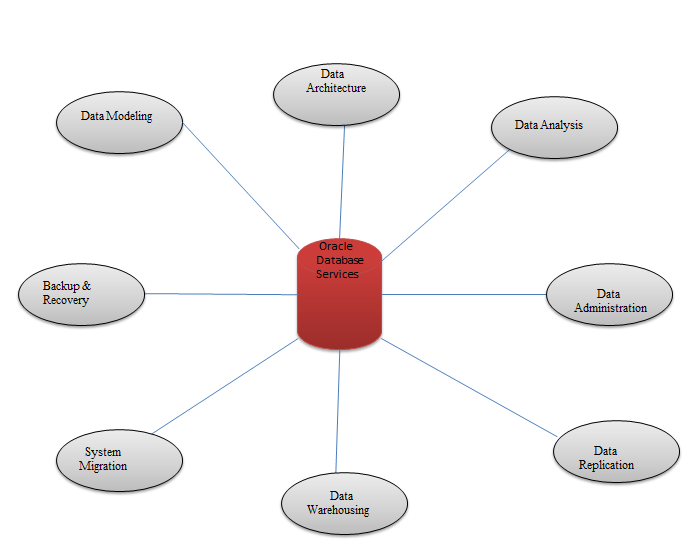
Oracle database services provides many more functionalities like data architecture, data modelling, data analysis, backup and recovery etc, which is shown in the below diagram.
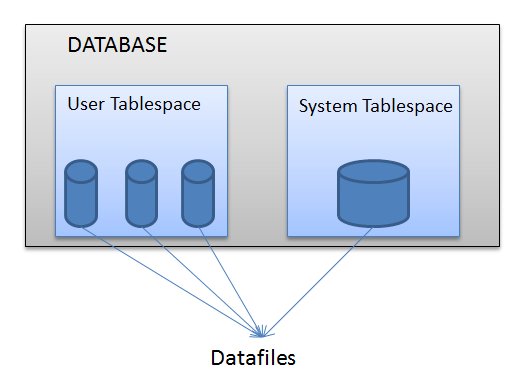
A database is divided into logical storage units called tablespaces, which group related logical structures together. Each tablespace in turn consists of one are more data files.
All the tables and other objects in oracle are stored in tablespace logically, but physically they are stored in the data files associated with the tablespace.
The whole process is built in a relational database framework in which data objects may be directly accessed by users through structured query language (SQL). Oracle is fully scalable, reliable and secure relational database architecture and is often used by global enterprises, which manage and process data across wide and local area networks. The Oracle database has its own network component to allow communications across networks. Oracle DB is also known as Oracle RDBMS.
Features of oracle database
- Scalability
- Robust, reliable, available, secure architecture.
- One development model.
- One management interface for all application.
- Industry standard technologies.
Relational Database
Oracle provides a flexible RDBMS and using its features we can store and manage data with all the advantages of a relational structure plus PL/SQL, an engine that provide you with the ability to store and execute program units. Oracle server provides a features retrieval of data based on optimization techniques. It includes the security features that control how a database is accessed and used.
