
Ingres is open source Relational Database Management System (RDBMS) that helps in reducing various IT costs and on the other hand provides the class features that can be expected from a high level database. It is mainly developed by a database research group at UC Berkeley. The commercial version of Ingres is called Open Ingres.
There are two different types of Ingres:
-
University Ingres - University Ingres was the first open source relational database management system which was developed in the 1970's by Michael Stonebreaker at the University of California, it's also called public domain version and was free to use and distribute.
-
Commercial Ingres - Commercial version of Ingres was developed and marketed by Computer Associates for which one has to pay for its usage, it's also called Open Ingres. These days only commercial Ingres is in use and we will discuss only about it.
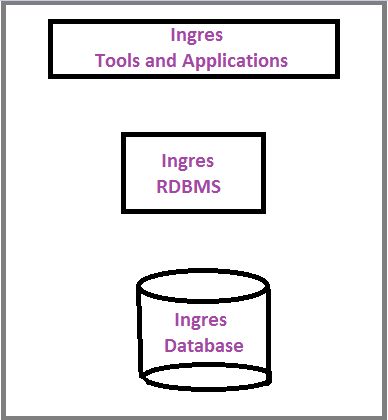
Some noteworthy points about Ingres are
- Ingres is a robust RDBMS which provides some first-class development tools.
- It is mainly used in large commercial mission-critical applications and government applications.
- SQL and QUEL are the query language of the Ingres.
- To make Ingres more object oriented DBMS, many object oriented features have been added to it.
- It is cross platform and is mainly written in C.
Features
It offers good capabilities for availability, security, administration, programmability and platform support. Other features include:
-
Increased Flexibility -Ingres helps business to improve functionality, reduce risk, best solutions to customer. It also supports the latest standards such as JDBC, ODBC and .NET.
-
Easy Migration -A Migration Toolkit helps customers in migrating to Ingres from Oracle's Enterprise and My SQL databases.
-
Security -Ingres provides various security mechanisms such as regulatory compliance, configurable user authentication etc. It also provides column encryption capabilities that enable database administrators to secure specific fields in a record such as credit card numbers, social security numbers without having to encrypt the entire table.
